
Seetrus optical sensors.
Built for event & venue rigging.
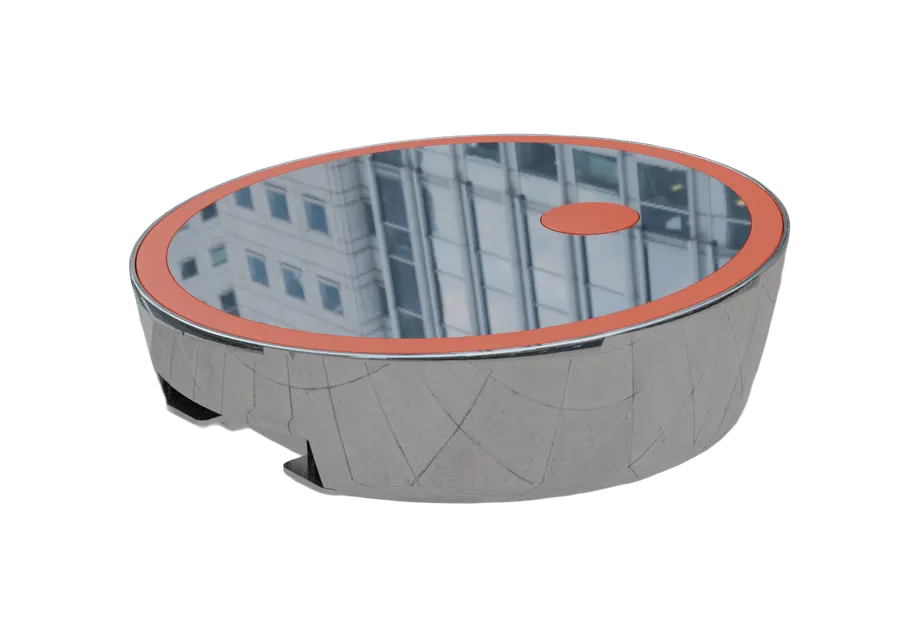
A 30 cm Ø × 10 cm (5 kg, 24 W at 120 V) enclosure that analyzes foot traffic and crowd density directly in volatile memory (RAM), with zero stored video and zero personal identification.
Data processing pipeline
What happens inside the sensor, on site and in the cloud
Observed local throughput (15 to 30 Mbps per sensor) reflects on-site local architecture; no video stream is stored or archived.
1. Optical zone framing
The sensor frames the calibrated usable floor area (pit, gate, bridge) from ~15 ft height.
2. In-RAM edge extraction
Silhouettes are converted into anonymous coordinates for counting or density; no facial or biometric template is extracted.
3. Immediate RAM overwrite
Raw frames are overwritten in RAM within milliseconds. Nothing is written to disk inside the unit.
4. TLS aggregates (Local / AWS Montreal)
Encrypted counts travel locally on site or to AWS Montreal (ca-central-1) to feed Mission Control.
Unified FR/EN reference • Dated November 10, 2026
Seetrus technical specifications & site prerequisites
Observed density — Front-of-stage pit (people/m², simulated)
people/m²Typical stage mount
~15 ft
Downstage truss (1st and 2nd thirds) or delay towers
Power draw
24 W
Continuous 120 V AC feed (external 12 V DC)
Typical setup — Festivals & concerts
Mounted on the downstage truss facing the pit, wired Ethernet back to FOH/production and an Orangead specialist at the security command post.
- Install time: 30 to 60 minutes per sensor (lift provided by venue when required).
- Observed bandwidth: 15 to 30 Mbps per sensor on the local network.
- Mounted with C-clamps, straps or bolts plus steel safety cable.
Clear responsibility split
Orangead designs the coverage plan, configures and calibrates sensors, delivers the platform and verifies the report. The venue provides structure access, any required lift, continuous 120 V power and the agreed network.
Power or network interruption handling
Continuous 120 V power is required to measure. If a link drops, the zone switches to "Unavailable" with its last valid timestamp — never a misleading zero — and the gap is documented in the final report.
Known physical limits
Sightline obstructions (banners, trees), insufficient height, pitch darkness with zero stage lighting or heavy pyrotechnic smoke limit optical visibility and are assessed during scoping.